Introduction Introduction
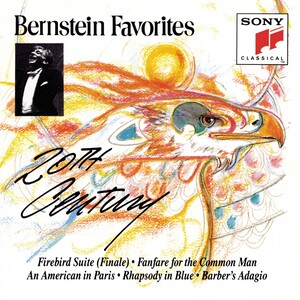
The Modern period (c.1900-1945) opened up a veritable revolution in every realm of musical composition: rhythm, harmony, melody, form, timbre, and beyond. The pioneers of the early Modern period – Stravinsky, Schoenberg, Bartòk, Ives, and others – faced resistance and often scorn as they fearlessly rebelled against the conventions of the late-Romantic aesthetic. Given these innovations, the music often presents technical challenges that demand a particular kind of performer – including some of the most gifted in the classical arena. This “Modern Celebration” is the eighth in our series of features devoted to the nine principal periods of music history, whereby we invite our visitors – regardless of experience – to explore and discover the many composers and works that exalt the era, and some of the outstanding artists that successfully bring it to our ears. Specifically, this Feature includes a brief written Overview of the Modern era, as well as a useful index of key composers, works, and artists – each of which is linked to the related page on our site. In addition, we provide a two-hour 1-Click Concert (full streams to our subscribers only), and a featured “sampler” album. Enjoy!
"Music's exclusive function is to structure the flow of time and keep order in it."
– Igor Stravinsky
Overview
The term “modern” is admittedly vague, and yet within the realm of art history it holds a rather specific meaning, as subsumed under the rubric “modernism”: applied to the period roughly 1880 to the end of WW II, the term refers to the conviction among progressive artists to offer a unique if not radical form of expression yielding a cutting-edge view of history, pointing decidedly to the future, and bringing forth the subjective experience of the artist and of modern life in general. The roots of the aesthetic go back to earlier 19th c. notions of art’s inherent independence of moral or social standards – as discerned in Victor Cousin’s famous expression “l’art pour l’art” (Art for art’s sake) – and especially to mid-century claims by Baudelaire and others regarding the revolutionary or avant-garde obligations of artists to reject historical models. In music, the roots lie in Richard Wagner’s notion of music history and the imperative of art to transcend the past, in opposition of those (e.g., Giacomo Meyerbeer) who merely conceded to popular taste. In the years after 1900, following leads established by Gustav Mahler, Richard Strauss, Claude Debussy, and Alexander Skriabin, among others, composers yielded to the “demands” of modernity – to shatter expectations and conventions, and instead to reflect the conditions of modern life with its progress in science, technology, urbanization, and industry.
The first dominant proponents of musical Modernism included especially Igor Stravinsky, Arnold Schoenberg, and Béla Bartók; despite their differing musical approaches, all three responded to an imperative to move beyond the established practices of tonality (major and minor keys, modulation, etc.), rhythmic regularity, use of traditional instruments and established forms, etc. The often violent response of the audience and critics to this music was in fact a reinforcing phenomenon to “serious” composers, who were critical of contemporary standards of culture and the prevailing addiction to the mere entertaining dimension of music. Indeed, it was in response to the growing schism between composer and public, especially after World War I, that many composers turned to private societies or organizations dedicated to “modern” music – such as Schoenberg’s Verein für Musikalische Privataufführungen (Society for Private Musical Performances, 1918), and similar efforts by Edgard Varèse, Henry Cowell, Aaron Copland, and many others. As in painting, poetry, and other art forms, music flew through a number of short-lived movements –Expressionism (Schoenberg, Alban Berg, Anton Webern), Primitivism (Stravinsky), Folkorism (Bartók, Villa-Lobos, Bohuslav Martinu), Neo-Classicism (Stravinsky, Sergey Prokofiev, Darius Milhaud), etc.
By the mid-1930s, opposition to Modernism came directly from political doctrines as well, namely in the Soviet Union and Nazi Germany, both of which attacked the modernist trends as degenerate, subversive, and anti-nationalist – leading to official bans. Ironically, the decade before World War II had witnessed an internal reactionary aesthetic among many composers throughout Europe and in America (Francis Poulenc, Benjamin Britten, Paul Hindemith, Copland, etc.) – one, however, that would reverse itself markedly following the War, commencing the so-called “Contemporary” Period.
Learn More
|