Composer (MIDI)
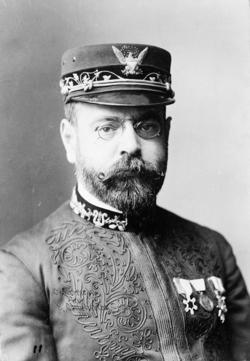
John Philip Sousa (1854-1932); USA
Loading, please wait...
American bandmaster and composer John Philip Sousa did more than anyone to elevate the status of the military wind band. Sousa's boyhood coincided with the American Civil War. The sounds of military bands were constantly in the air. His first musical training was on the violin, and his father instructed him on several wind instruments. At 13 the lure of a visiting circus was a powerful incentive for the boy to join up as a musician; however, his astute father, himself a bandsman, caught wind of the lad's intention and procured an apprenticeship in the Marine Corps Band for his son. It proved to be a happy move for all involved. The young musician sharpened his skills in that musical organization called the "President's own." He composed his first march, Salutation, at 16.
At 18, Sousa began to play violin in various theater orchestras. In 1880, Sousa was appointed leader of the Marine Corps Band, which he would serve for 12 years, under five presidents. He now began to hit his stride with his own marches, turning out such classics as Semper Fidelis, The Washington Post, The Thunderer, and High School Cadets. In 1892 Sousa, resigning his position with the Marine Corps, organized his own band, known simply as Sousa's Band. Through national, European, and world tours, the band's success was nothing short of a phenomenon, Sousa receiving many honors and decorations from the royal families of Great Britain and Europe.
He continued turning out his series of comic operas, including the highly successful El capitan (1895). From his pen flowed songs, symphonic poems, and more marches, this period seeing The Liberty Bell (1893), King Cotton (1895), Hands Across the Sea (1899) and, most notably, The Stars and Stripes Forever (1897).
With the entry of the United States into World War I, however, Sousa laid aside civilian activity and assumed command of all naval bands. In 1920, he reorganized his band and resumed touring. Sousa died while en route to conduct a high school band in Reading, PA.
Among his other achievements was his role as a founder of ASCAP. He also helped develop the sousaphone, a large tuba which features in parade bands. Ultimately, his compositions are his monument. But particularly it is the marches which endure. Sousa was not afraid to invest his marches with beautiful melody and unusual harmonies, placing them above being merely parade music. Sousa continued to explore within his chosen field until the end and many from his final decade such as The Gridiron Club and Sesquicentennial Exposition are remarkable for their inventiveness and vitality. The composer himself mused upon what constitutes the perfect march, stating that "it should make a man with a wooden leg step out." In virtually all of his creations in this field, Sousa passed this standard with flying colors. © Wayne Gerard Reisig, All Music Guide
At 18, Sousa began to play violin in various theater orchestras. In 1880, Sousa was appointed leader of the Marine Corps Band, which he would serve for 12 years, under five presidents. He now began to hit his stride with his own marches, turning out such classics as Semper Fidelis, The Washington Post, The Thunderer, and High School Cadets. In 1892 Sousa, resigning his position with the Marine Corps, organized his own band, known simply as Sousa's Band. Through national, European, and world tours, the band's success was nothing short of a phenomenon, Sousa receiving many honors and decorations from the royal families of Great Britain and Europe.
He continued turning out his series of comic operas, including the highly successful El capitan (1895). From his pen flowed songs, symphonic poems, and more marches, this period seeing The Liberty Bell (1893), King Cotton (1895), Hands Across the Sea (1899) and, most notably, The Stars and Stripes Forever (1897).
With the entry of the United States into World War I, however, Sousa laid aside civilian activity and assumed command of all naval bands. In 1920, he reorganized his band and resumed touring. Sousa died while en route to conduct a high school band in Reading, PA.
Among his other achievements was his role as a founder of ASCAP. He also helped develop the sousaphone, a large tuba which features in parade bands. Ultimately, his compositions are his monument. But particularly it is the marches which endure. Sousa was not afraid to invest his marches with beautiful melody and unusual harmonies, placing them above being merely parade music. Sousa continued to explore within his chosen field until the end and many from his final decade such as The Gridiron Club and Sesquicentennial Exposition are remarkable for their inventiveness and vitality. The composer himself mused upon what constitutes the perfect march, stating that "it should make a man with a wooden leg step out." In virtually all of his creations in this field, Sousa passed this standard with flying colors. © Wayne Gerard Reisig, All Music Guide
-
Band and Orchestral Works
55 midis
- Marches for Band (A-J)
17 midis
- Atlantic City Pageant March
1 midi
- Belle of Chicago
1 midi
- Boy Scouts of America March
1 midi
- Bullets and Bayonets
1 midi
- Comrades of the Legion
1 midi
- Corcoran Cadets March
1 midi
- Crusader March
2 midis
- Dauntless Battalion
1 midi
- Directorate
1 midi
- Gallant Seventh
1 midi
- George Washington Bicentennial March
1 midi
- Golden Jubilee
1 midi
- Hands Across the Sea
1 midi
- High School Cadets March
1 midi
- Honoured Dead
1 midi
- Imperial Edward
1 midi
- Atlantic City Pageant March
-
Marches for Band (K-Z)
35 midis
- Kansas Wildcats
1 midi
- King Cotton March
2 midis
- Liberty Bell March
4 midis
- Loyal Legion
1 midi
- Naval Reserve
1 midi
- Nobles of the Mystic Shrine
1 midi
- Northern Pines
1 midi
- Occidental March
2 midis
- On Parade (The Lion Tamer)
1 midi
- Our Flirtations March
1 midi
- Rifle Regiment
1 midi
- Royal Welch Fusiliers
1 midi
- Saber and Spurs
1 midi
- Semper Fidelis
2 midis
- Solid Men To the Front!
1 midi
- Sound Off
1 midi
- Stars and Stripes Forever
5 midis
- Thunderer March
3 midis
- Transit of Venus
1 midi
- U.S. Field Artillery
1 midi
- Washington Post March
3 midis
- Kansas Wildcats
-
Other Works for Band and Orchestra
3 midis
- Marches for Band (A-J)
-
Band and Orchestral Works
55 midis
- Marches for Band (A-J)
17 midis
- Atlantic City Pageant March
1 midi
- Belle of Chicago
1 midi
- Boy Scouts of America March
1 midi
- Bullets and Bayonets
1 midi
- Comrades of the Legion
1 midi
- Corcoran Cadets March
1 midi
- Crusader March
2 midis
- Dauntless Battalion
1 midi
- Directorate
1 midi
- Gallant Seventh
1 midi
- George Washington Bicentennial March
1 midi
- Golden Jubilee
1 midi
- Hands Across the Sea
1 midi
- High School Cadets March
1 midi
- Honoured Dead
1 midi
- Imperial Edward
1 midi
- Atlantic City Pageant March
-
Marches for Band (K-Z)
35 midis
- Kansas Wildcats
1 midi
- King Cotton March
2 midis
- Liberty Bell March
4 midis
- Loyal Legion
1 midi
- Naval Reserve
1 midi
- Nobles of the Mystic Shrine
1 midi
- Northern Pines
1 midi
- Occidental March
2 midis
- On Parade (The Lion Tamer)
1 midi
- Our Flirtations March
1 midi
- Rifle Regiment
1 midi
- Royal Welch Fusiliers
1 midi
- Saber and Spurs
1 midi
- Semper Fidelis
2 midis
- Solid Men To the Front!
1 midi
- Sound Off
1 midi
- Stars and Stripes Forever
5 midis
- Thunderer March
3 midis
- Transit of Venus
1 midi
- U.S. Field Artillery
1 midi
- Washington Post March
3 midis
- Kansas Wildcats
-
Other Works for Band and Orchestra
3 midis
- Marches for Band (A-J)


Files of this type are not available at this time. Please select ALL from above.
Click on a category to view the list of works