Composer (MIDI)
Béla Bartók (1881-1945); HUN
 Loading, please wait...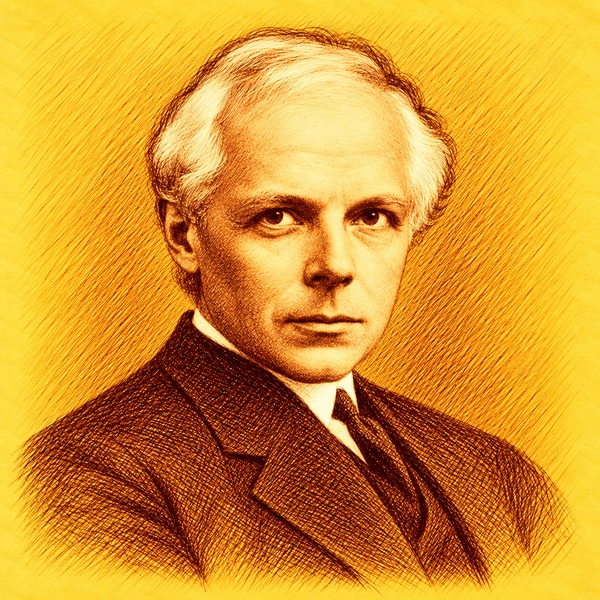
Béla Bartók (1881–1945) was a Hungarian composer, pianist, and ethnomusicologist whose work transformed both modern composition and the scholarly study of folk music. Born in Nagyszentmiklós, then part of the Austro-Hungarian Empire, he showed exceptional musical ability as a child and later studied piano and composition at the Royal Academy of Music in Budapest. An early encounter with the music of Richard Strauss encouraged his first major compositional ambitions, but a more decisive influence came from his discovery of authentic Hungarian peasant music. Beginning in 1905, Bartók and his colleague Zoltán Kodály traveled extensively through Hungary and neighboring regions, recording, transcribing, and classifying thousands of traditional melodies. This research profoundly shaped Bartók's musical language and made him a pioneer of modern ethnomusicology. Increasingly opposed to fascism and Hungary's political alignment with Nazi Germany, he emigrated to the United States in 1940. He spent his final years in New York, struggling with illness and financial insecurity while continuing to compose and conduct research, and died there in 1945.
Bartók forged a highly individual style from folk-derived rhythms and melodic patterns, advanced chromatic harmony, contrapuntal discipline, and a powerful sense of musical architecture. His stage works include the opera Bluebeard's Castle, the ballet The Wooden Prince, and the pantomime The Miraculous Mandarin. His six string quartets rank among the central achievements of twentieth-century chamber music, while works such as Music for Strings, Percussion and Celesta, Divertimento for String Orchestra, and the Concerto for Orchestra display his remarkable command of instrumental color and large-scale form. Bartók was also a virtuoso pianist, and his keyboard music ranges from the pedagogical collection Mikrokosmos to the three piano concertos and the Sonata for Two Pianos and Percussion. His synthesis of folk traditions and modernist techniques created a musical language at once rigorous, elemental, and intensely expressive, establishing him as one of the defining composers of the twentieth century.

###
Bartók, Béla (b Nagyszentmiklós, Hungary (now Romania), 1881; d NY, 1945). Hung. composer, pianist, and folklorist. Parents were musical and mother gave him his first pf. lessons. In 1894 at Bratislava (then Pozsony) studied with the cond. Laszlo Erkel until 1899 when he entered Budapest Royal Acad. of Mus. In 1902 heard a perf. of Strauss's Also sprach Zarathustra which stimulated his powers of comp. to such a degree that he wrote his nationalistic tone-poem Kossuth in 1903. By this time was travelling abroad as solo pianist in mus. by Liszt and other kbd. virtuosi. In 1905 began systematic exploration of Hungarian peasant mus. and in 1906, with his fellow-composer Kodály, pubd. a coll. of 20 folk-songs. In 1907 became prof. of pf. at the Budapest RAM. For the next decade, while his mus. was badly received in his own country, continued systematic coll. of Magyár folk-songs. In 1917 his ballet The Wooden Prince was successfully prod. in Budapest and led to the staging in the following year of his 1-act opera Duke Bluebeard's Castle (1911). In 1922 and 1923 his first 2 vn. sonatas had their f.ps. in London, and in 1923 comp. the Dance Suite to celebrate the 50th anniv. of the union of Buda and Pest. During the 1920s resumed career as pianist, composing several works for his own use. In 1934 was given a salaried post in the Hung. Acad. of Sciences in order that he could prepare his folk-song coll. for publication. In the spring of 1940, in view of political developments in Hungary, emigrated to USA. This was not a happy time for him; his health began to fail, his mus. was infrequently perf., and there was little demand for his services as a pianist. Nevertheless the Koussevitzky Foundation commissioned the Concerto for Orchestra, Yehudi Menuhin a solo vn. sonata, and William Primrose a va. conc. (left unfinished but completed by Tibór Sérly). He died from leukaemia.
Bartók's mus. is a highly individual blend of elements transformed from his own admirations: Liszt, Strauss, Debussy, folk-mus., and Stravinsky. Perhaps his greatest achievement lies in his 6 str. qts. in which formal symmetry and thematic unity were successfully related. But the melodic fertility and rhythmical vitality of all his mus. have ensured its consistent success since his death. Prin. comps.:
STAGE: Duke Bluebeard's Castle (A kékszakállù herceg vára), Op.11, 1-act opera (1911, rev. 1912, 1918); The Wooden Prince (A fából fargott királyfi), Op.13, 1-act ballet (1914-17); The Miraculous Mandarin (A csodálatos mandarin), Op.19, 1-act pantomime (1918-19, orch. 1923, rev. 1924, 1926-31).
ORCH.: Kossuth, sym.-poem (1903); Rhapsody, pf., orch., Op.1 (1904); Suite No.1, Op.3 (1905, rev. c.1920), No.2 (small orch.), Op.4 (1905-7, rev. 1920, 1943); vn. conc. No.1. (1907-8; 1st movt. rev. as No.1 of 2 Portraits), No.2 (1937-8); 2 Portraits, Op.5 (No.1 1907-8, No.2 orch. 1911); 2 Pictures, Op.10 (1910); Romanian Dance, Op.11 (1911); 4 Pieces, Op.12 (1912, orch. 1921); Suite (3 dances), The Wooden Prince (1921-4); Suite, The Miraculous Mandarin (1919, 1927); Dance Suite (1923); pf. conc. No.1 (1926), No.2 (1930-1), No.3 (1945); Rhapsody, vn., orch., No.1 (1928), No.2 (1928, rev. 1944); Transylvanian Dances (1931); Hungarian Sketches (1931); Hungarian Peasant Songs (1933); Music for Strings, Percussion and Celesta (1936); Divertimento, str. (1939); 2-pf. conc. (arr. of sonata for 2 pf. and perc.) (1940); Concerto for Orchestra (1942-3, rev. 1945); va. conc. (completed from draft by Sérly) (1945).
VOICE(S) & ORCH.: 3 Village Scenes, women's vv. (1926); Cantata Profana (The 9 Enchanted Stags), ten., bar., double ch., orch. (1930); 5 Hungarian Folk Songs, low v. (1933).
CHORUS: Evening, male vv. (1903); 4 Old Hungarian Folk Songs, male vv. (1910, rev. 1912); 5 Slovak Folk Songs, male vv. (1917); 5 Hungarian Folk Songs (1930); 5 Székely Songs, male vv. (1932); 27 Traditional Choruses, children's and women's vv. (1935); From Olden Times, male vv. (1935).
CHAMBER MUSIC: pf. qt. (1898); pf. quintet (1903-4, rev. ?1920); str. qt. No.1, Op.7 (1908), No.2, Op.17 (1915-17), No.3 (1927), No.4 (1928), No.5 (1934), No.6 (1939); vn. sonatas, No.1 (1921), No.2 (1922); Rhapsody No.1, vn., pf. (1928, also orch. vers.), No.2 (1928, rev. 1945, also orch. vers.); Rhapsody, vc., pf. (1928); 44 Duos, 2 vn. (1931); sonata, 2 pf., 2 perc. (1937, orch. 1940); sonata, unacc. vn. (1944); Contrasts, vn., cl., pf. (1938).
PIANO: 3 Klavierstücke, Op.13 (1897); Scherzo (Fantasie), Op.18 (1897); Scherzo in B minor (1900); 12 Variations (1900-1); 4 Pieces (1903); Rhapsody, Op.1 (1904, also orch. vers.); 14 Bagatelles, Op.6 (1908); 10 Easy Pieces (1908); 85 Pieces for Children (1908-9, rev. 1945); 2 Romanian Dances, Op.8a (1909-10, No.1 orch. 1911); 7 Sketches, Op.9b (1908-10); 4 Dirges, Op.9a (1909-10, No.2 orch. as No.3 of Hungarian Sketches, 1931); 3 Burlesques, Op.8c (1908-11, No.2 orch. as No.4 of Hungarian Sketches, 1931); Allegro barbaro (1911); sonatina (1915, orch. as Transylvanian Dances, 1931); Romanian Dances (1915, orch. 1917); Suite, Op.14 (1916); 3 Hungarian Folk Tunes (c.1914-18); 15 Hungarian Peasant Songs (1914-18, Nos. 6-12, 14-15 orch. 1933); 3 Studies, Op.18 (1918); 8 Improvisations on Hungarian Peasant Songs, Op.20 (1920); Dance Suite (1925, arr. of orch. work); sonata (1926); Out of Doors (1926); 9 Little Pieces (1926); Mikrokosmos, 6 vols. containing 153 ‘progressive pieces’ (1926, 1932-9).
Also many solo songs, editions of Italian kbd. mus., etc.
Copyright © 1996 Oxford University Press - By permission of Oxford University Press
###
Read biography at allmusic.com.
|
|
Béla Bartók (1881–1945) was a Hungarian composer, pianist, and ethnomusicologist whose work transformed both modern composition and the scholarly study... More
|
 Files of this type are not available at this time. Please select ALL from above.
 Click on a category to view the list of works
-
Piano Works
36 midis
- Piano Works based on Folk Music
9 midis
-
Other Piano Works
27 midis
- Allegro barbaro, BB63, Sz.49
1 midi
- 14 Bagatelle, Op.6, BB50
5 midis
- 51 Easy Piano Pieces, BB39
11 midis
- For Children (Gyermekeknek): 85 Teaching Pieces in 4 volumes, BB53, Sz.42
1 midi
- 4 Piano Pieces, BB27, DD71
1 midi
- Piano Sonata, BB88
3 midis
- 7 Sketches, Op.9b, BB54
1 midi
- Suite for Piano, Op.14, BB70, Sz.62
4 midis
- Allegro barbaro, BB63, Sz.49
- Piano Works based on Folk Music
-
Orchestral Works
4 midis
- Concertos
4 midis
- Concertos
-
Chamber Works
1 midi
-
Other Chamber Works
1 midi
-
Other Chamber Works
-
Vocal Works
1 midi
- Choral Works
1 midi
- 4 Slovak Folksongs, BB78
1 midi
- 4 Slovak Folksongs, BB78
- Choral Works
-
Piano Works
36 midis
- Piano Works based on Folk Music
9 midis
-
Other Piano Works
27 midis
- Allegro barbaro, BB63, Sz.49
1 midi
- 14 Bagatelle, Op.6, BB50
5 midis
- 51 Easy Piano Pieces, BB39
11 midis
- For Children (Gyermekeknek): 85 Teaching Pieces in 4 volumes, BB53, Sz.42
1 midi
- 4 Piano Pieces, BB27, DD71
1 midi
- Piano Sonata, BB88
3 midis
- 7 Sketches, Op.9b, BB54
1 midi
- Suite for Piano, Op.14, BB70, Sz.62
4 midis
- Allegro barbaro, BB63, Sz.49
- Piano Works based on Folk Music
-
Orchestral Works
4 midis
- Concertos
4 midis
- Concertos
-
Chamber Works
1 midi
-
Other Chamber Works
1 midi
-
Other Chamber Works
-
Vocal Works
1 midi
- Choral Works
1 midi
- 4 Slovak Folksongs, BB78
1 midi
- 4 Slovak Folksongs, BB78
- Choral Works