Composer (MIDI)
François Couperin (1668-1733); FRA
 Loading, please wait...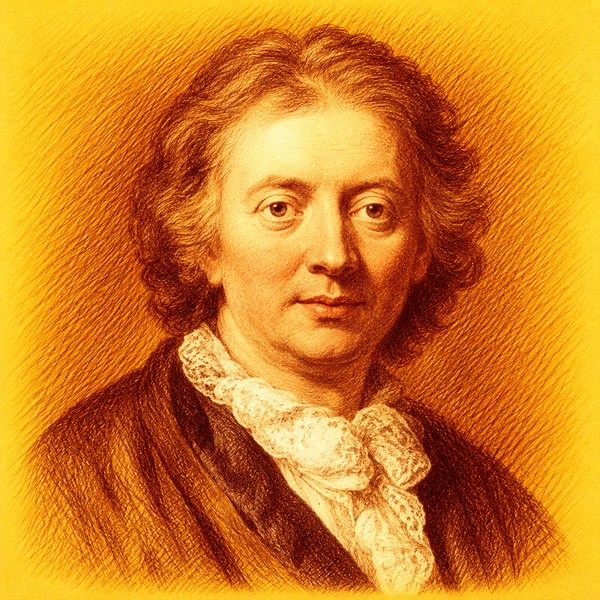
François Couperin (1668–1733), known as “Couperin le Grand,” was a French composer, harpsichordist, and organist and the most celebrated member of a remarkable musical dynasty. Born in Paris, he inherited the position of organist at the church of Saint-Gervais from his father’s family and later entered royal service. In 1693 he became one of the organists of the Chapelle Royale under Louis XIV and subsequently served as harpsichordist and teacher to members of the royal family. Couperin worked within the highly cultivated musical world of Versailles while retaining strong connections to Parisian musical life. His publications reveal both a practical musician and an articulate theorist concerned with refined performance. The treatise L'Art de toucher le clavecin provides invaluable guidance on fingering, ornamentation, touch, and the expressive ideals of French harpsichord playing.
Couperin’s greatest achievement is his four books of Pièces de clavecin, containing more than two hundred pieces grouped into suites that he called ordres. Alongside traditional dances are vividly titled character pieces such as Les Barricades mystérieuses, Le Tic-Toc-Choc, and Les Ombres errantes, miniatures of extraordinary rhythmic, harmonic, and descriptive subtlety. Couperin sought to unite French elegance with Italian vitality, an ideal explicitly embodied in Les Nations and Les Goûts-réünis. His sacred works include the deeply expressive Leçons de ténèbres, while his chamber music demonstrates equal refinement. His precise notation of ornaments and sensitivity to keyboard sonority made his music a model of French style. Admired by Bach and later championed by composers including Brahms, Debussy, and Ravel, Couperin remains one of the defining masters of the Baroque keyboard.

###
Couperin, François (b Paris, 1668; d Paris, 1733). Fr. composer, harpsichordist, and organist, the most distinguished of his family, known as ‘Couperin le Grand’ because of his prowess as an organist. Taught by his father Charles and by Jacques Thomelin. Became org. of St Gervais, Paris, in 1685, holding post until his death. In 1693 succeeded Thomelin as org. of Royal chapel, with the title ‘organiste du Roi’ (Louis XIV). In 1717 became ‘ordinaire de la musique de la chambre du Roi’, acknowledgement of his special position in the court. On almost every Sunday Couperin and colleagues gave chamber concerts for the king, for which he comp. what he called ‘Concerts’. These are in the form of suites and may have been intended for the hpd., of which he was a virtuoso, but were probably perf. on vn., viol, ob., bn., and hpd. (clavecin). Couperin was greatly influenced by Corelli and introduced into Fr. the Italian's trio-sonata form, himself publishing in 1726 Les Nations, a set of 4 Suites (Ordres) for 2 vn. and hpd. Also comp. ‘grand trio sonata’ sub-titled Le Parnasse, ou l'Apothéose de Corelli. In 1716 pubd. famous book L'Art de toucher le clavecin, containing instructions for fingering, methods of touch, and execution of agréments (ornamentation) in performing his hpd. pieces. This had strong influence on Bach. His 4 pubd. vols. of hpd. works contain over 230 pieces which proclaim him a supreme master of the kbd. Most have picturesque or descriptive titles and are like miniature tone-poems. This perhaps is a clue to their appeal to Richard Strauss, who orchestrated several Couperin pieces. First complete edn. of Couperin's hpd. mus. was prepared by Brahms and Chrysander, 1871-88. Ravel comp. a 20th-cent. tribute to him in Le tombeau de Couperin (1914-17). Prin. works:
CHAMBER MUSIC: Quatre Concerts Royaux (1722); Les Goûts-Réunis ou Nouveaux Concerts (10 Concerts incl. the ‘Corelli’ Grand Trio, 1724); Les Nations (4 Ordres for 2 str. and hpd. 1726); Concert instrumental (‘in memory of the immortal Lully’, 1725).
HARPSICHORD: Pièces de Clavecin, Book 1 (5 Ordres, 1713), Book 2 (7 Ordres, 1717), Book 3 (7 Ordres, 1722), Book 4 (8 Ordres, 1730).
ORGAN: 42 Pièces d'orgue consistantes en deux Messes (1690). Also songs and religious works.
Copyright © 1996 Oxford University Press - By permission of Oxford University Press
###
Read biography at allmusic.com.
|
|
François Couperin (1668–1733), known as “Couperin le Grand,” was a French composer, harpsichordist, and organist and the most celebrated member... More
|
 Files of this type are not available at this time. Please select ALL from above.
 Click on a category to view the list of works
-
Harpsichord Works
12 midis
- Pieces de clavecin...Book 1 (1713; Ordres Nos.1-5)
1 midi
- Ordre 2 in D- or D
1 midi
- Ordre 2 in D- or D
-
Pieces de clavecin...Book 2 (1716-17; Ordres Nos.6-12)
4 midis
- Ordre 6 in Bb
3 midis
- Ordre 12 in E or E-
1 midi
- Ordre 6 in Bb
-
Pieces de clavecin...Book 3 (1722; Ordre Nos.13-19)
4 midis
- Ordre 13 in B-
1 midi
- Ordre 14 in D- or D
1 midi
- Ordre 18 in F- or F
1 midi
- Ordre 19 in D- or D
1 midi
- Ordre 13 in B-
-
Pieces de clavecin...Book 4 (1730; Ordre Nos.20-27)
1 midi
- Ordre 26 in F#-
1 midi
- Ordre 26 in F#-
-
L’art de toucher le clavecin (1716) and Other Harpsichord Works
2 midis
- L’art de toucher le clavecin
1 midi
- Gavotte in G
1 midi
- L’art de toucher le clavecin
- Pieces de clavecin...Book 1 (1713; Ordres Nos.1-5)
-
Vocal Works
1 midi
-
Harpsichord Works
12 midis
- Pieces de clavecin...Book 1 (1713; Ordres Nos.1-5)
1 midi
- Ordre 2 in D- or D
1 midi
- Ordre 2 in D- or D
-
Pieces de clavecin...Book 2 (1716-17; Ordres Nos.6-12)
4 midis
- Ordre 6 in Bb
3 midis
- Ordre 12 in E or E-
1 midi
- Ordre 6 in Bb
-
Pieces de clavecin...Book 3 (1722; Ordre Nos.13-19)
4 midis
- Ordre 13 in B-
1 midi
- Ordre 14 in D- or D
1 midi
- Ordre 18 in F- or F
1 midi
- Ordre 19 in D- or D
1 midi
- Ordre 13 in B-
-
Pieces de clavecin...Book 4 (1730; Ordre Nos.20-27)
1 midi
- Ordre 26 in F#-
1 midi
- Ordre 26 in F#-
-
L’art de toucher le clavecin (1716) and Other Harpsichord Works
2 midis
- L’art de toucher le clavecin
1 midi
- Gavotte in G
1 midi
- L’art de toucher le clavecin
- Pieces de clavecin...Book 1 (1713; Ordres Nos.1-5)
-
Vocal Works
1 midi