Composer (MIDI)
Francesco Landini (1325-1397); ITA
 Loading, please wait...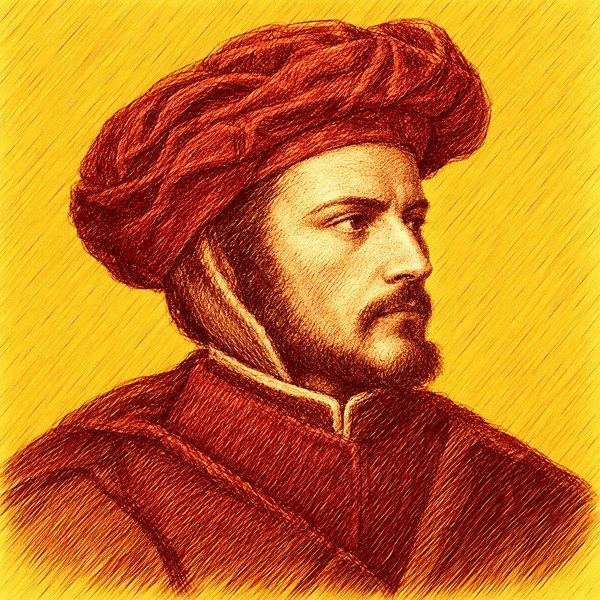
Francesco Landini (c.1325–1397) was an Italian composer, organist, poet, singer, and instrument maker, and the most celebrated musician of fourteenth-century Italy. Probably born in or near Florence, he lost his sight in childhood as a result of smallpox. His blindness did not impede an extraordinary musical career: he became renowned as an organist and performer on several instruments and was associated for many years with the church of San Lorenzo in Florence. Contemporary writers praised not only his musical skill but also his learning, poetry, and personal charm.
Landini was the foremost master of the Italian Trecento style, and more of his music survives than that of any other Italian composer of the century. His output consists predominantly of secular vocal music, especially two- and three-voice ballate, together with madrigals and a caccia. Among the many surviving pieces are Ecco la primavera, Non avrà ma’ pietà questa mia donna, and Questa fanciull’, Amor. His name is also associated with the “Landini cadence,” a characteristic melodic formula frequently encountered in fourteenth-century polyphony. His graceful melodic writing and subtle handling of vocal texture made him the defining musical personality of the Italian Ars Nova.

###
Read biography at allmusic.com.
|
|
Francesco Landini (c.1325–1397) was an Italian composer, organist, poet, singer, and instrument maker, and the most celebrated musician of fourteenth-century... More
|
 Files of this type are not available at this time. Please select ALL from above.
 Click on a category to view the list of works
-
Vocal Works
1 midi
-
Madrigals
1 midi
- Fa metter bando (madrigal)
1 midi
- Fa metter bando (madrigal)
-
Madrigals
-
Vocal Works
1 midi
-
Madrigals
1 midi
- Fa metter bando (madrigal)
1 midi
- Fa metter bando (madrigal)
-
Madrigals