Composer (MIDI)
Alessandro Scarlatti (1660-1725); ITA
 Loading, please wait...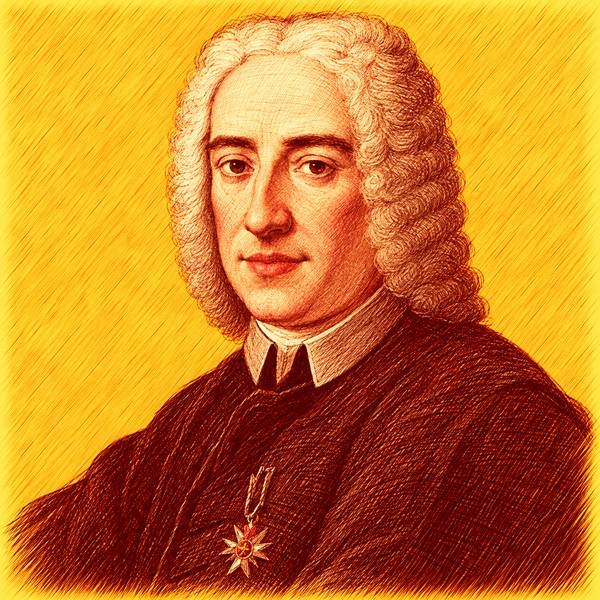
Alessandro Scarlatti (1660–1725) was an Italian composer born in Palermo and active principally in Rome and Naples. He achieved early success in Rome before becoming maestro di cappella to the Spanish viceroy in Naples, a position he held during several periods of his career. He also worked for major Roman patrons and institutions. The father of Domenico Scarlatti, Alessandro was among the leading composers of Italian vocal music around the turn of the eighteenth century.
Scarlatti composed prolifically in opera, cantata, oratorio, and sacred music and played a central role in the development of the Neapolitan operatic tradition. His operas include La Griselda, Mitridate Eupatore, and Il trionfo dell’onore. He wrote hundreds of chamber cantatas and helped establish conventions of the da capo aria and the Italian overture. His refined handling of voice, harmony, and dramatic form exerted a strong influence on eighteenth-century opera.

###
Scarlatti, (Petro) Alessandro (Gaspare) (b Palermo, 1660; d Naples, 1725). It. composer, specially important in development of opera and considered founder of so-called Neapolitan school. Taken to Rome 1672, said to have studied with Carissimi, and wrote first opera there 1679. Engaged by Queen Christina of Sweden, then living in Rome, as choirmaster and cond., 1680-4, for her private th. Court cond. to Viceroy of Naples, 1684-1702 and from 1708. Alternated between Rome and Naples for rest of life, in various court and church appointments. Contribution to opera was liberation of dramatic expression. Est. the da capo aria, first in Teodora (1692), the opera in which orch. ritornello is supposedly used for the first time. The so-called ‘It. ov.’ was introduced in 1696 in a revival of Dal male il bene. In 1685, in L'Olimpia vendicata, occurs the first recorded instance of acc. recit. His greatest opera is reckoned to be Mitridate Eupatore (1707), comp. for Prince Ferdinando de’ Medici, but a failure on its f.p. in Venice. In his late Rome years, the general enthusiasm for opera, stimulated by Scarlatti, overcame all ecclesiastical objections. His 115 operas incl. only one comic opera, Il trionfo dell'onore (Naples 1718). Sixty-four survive, wholly or in part, of which revivals show superb craftsmanship and lofty invention, perhaps the best known being the last, La Griselda (1721). He also wrote some 20 oratorios, 10 masses, several settings of Stabat Mater, etc., over 40 motets, over 600 solo cantatas with basso continuo and 60 with other instr., some 30 chamber cantatas for 2 vv., 28 serenatas, several madrigals, 12 chamber concs., various sonatas, and hpd. pieces, incl. variations on La Folia. Father of Domenico Scarlatti.
Copyright © 1996 Oxford University Press - By permission of Oxford University Press
###
Read biography at allmusic.com.
|
|
Alessandro Scarlatti (1660–1725) was an Italian composer born in Palermo and active principally in Rome and Naples. He achieved early... More
|
 Files of this type are not available at this time. Please select ALL from above.
 Click on a category to view the list of works
-
Keyboard Works
2 midis
- Capriccio in E
2 midis
- Capriccio in E
-
Vocal Works
4 midis
-
Oratorios, Serenatas, Vespers, Magnificats, and Antiphons
1 midi
-
Solo Vocal Works
3 midis
- Già il sole dal Gange
1 midi
- Se tu della mia morte
1 midi
- Toglietemi la vita
1 midi
- Già il sole dal Gange
-
Oratorios, Serenatas, Vespers, Magnificats, and Antiphons
-
Chamber Works
3 midis
- Cello Sonata
3 midis
- Cello Sonata
-
Keyboard Works
2 midis
- Capriccio in E
2 midis
- Capriccio in E
-
Vocal Works
4 midis
-
Oratorios, Serenatas, Vespers, Magnificats, and Antiphons
1 midi
-
Solo Vocal Works
3 midis
- Già il sole dal Gange
1 midi
- Se tu della mia morte
1 midi
- Toglietemi la vita
1 midi
- Già il sole dal Gange
-
Oratorios, Serenatas, Vespers, Magnificats, and Antiphons
-
Chamber Works
3 midis
- Cello Sonata
3 midis
- Cello Sonata