Composer (MIDI)
Alexander Glazunov (1865-1936); RUS
 Loading, please wait...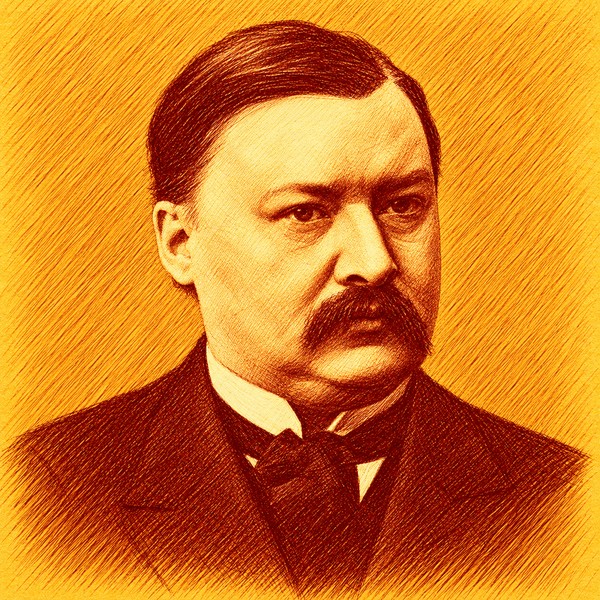
Alexander Glazunov (1865–1936) was born in St. Petersburg and emerged as a remarkable teenage prodigy under the guidance of Nikolai Rimsky-Korsakov. His Symphony No. 1 was premiered when he was only sixteen and immediately established him as an important new Russian composer. Supported by the wealthy patron Mitrofan Belyayev, Glazunov became closely associated with the generation that followed the nationalist “Mighty Handful.” In 1899 he joined the faculty of the St. Petersburg Conservatory and became its director in 1905, guiding the institution through the political upheavals surrounding the Revolution. He left the Soviet Union in 1928 and eventually settled in Paris, where he died in 1936.
Glazunov’s music reconciles Russian nationalist color with the formal discipline and craftsmanship of the central European tradition. His eight completed symphonies chart his development from youthful brilliance to a polished late-Romantic style, while orchestral works such as Stenka Razin and the ballets Raymonda and The Seasons display his gift for orchestral color. His Violin Concerto in A minor remains a repertory favorite, and the late Saxophone Concerto became an important work for that instrument. Though later regarded as conservative beside Stravinsky and other modernists, Glazunov served as an important bridge between nineteenth-century Russian nationalism and the professional institutions of twentieth-century Russian music.

###
Read biography at allmusic.com.
|
|
Alexander Glazunov (1865–1936) was born in St. Petersburg and emerged as a remarkable teenage prodigy under the guidance of Nikolai... More
|
 Files of this type are not available at this time. Please select ALL from above.
 Click on a category to view the list of works
-
Stage Works
11 midis
- The Seasons (ballet), Op.67
11 midis
- The Seasons (ballet), Op.67
-
Keyboard Works
6 midis
- Piano Works
6 midis
- 3 Études, Op.31
1 midi
- 3 Morceaux, Op.49
3 midis
- 4 Préludes et fugues, Op.101
2 midis
- 3 Études, Op.31
- Piano Works
-
Stage Works
11 midis
- The Seasons (ballet), Op.67
11 midis
- The Seasons (ballet), Op.67
-
Keyboard Works
6 midis
- Piano Works
6 midis
- 3 Études, Op.31
1 midi
- 3 Morceaux, Op.49
3 midis
- 4 Préludes et fugues, Op.101
2 midis
- 3 Études, Op.31
- Piano Works